2025/2026 autumn - winter
-
marika.solo
- Site Admin
- Posts: 29384
- Joined: 29 Sep 2021, 09:38
ITALY - storks from the streamed nest
ITALY - storks from the streamed nest
-
marika.solo
- Site Admin
- Posts: 29384
- Joined: 29 Sep 2021, 09:38
Re: ITALY - storks from the streamed nest
September 09
Hello everyone
first info about storklet from the streamed nest
Parco Regionale Gallipoli Cognato Piccole Dolomiti Lucane
04.09.2025
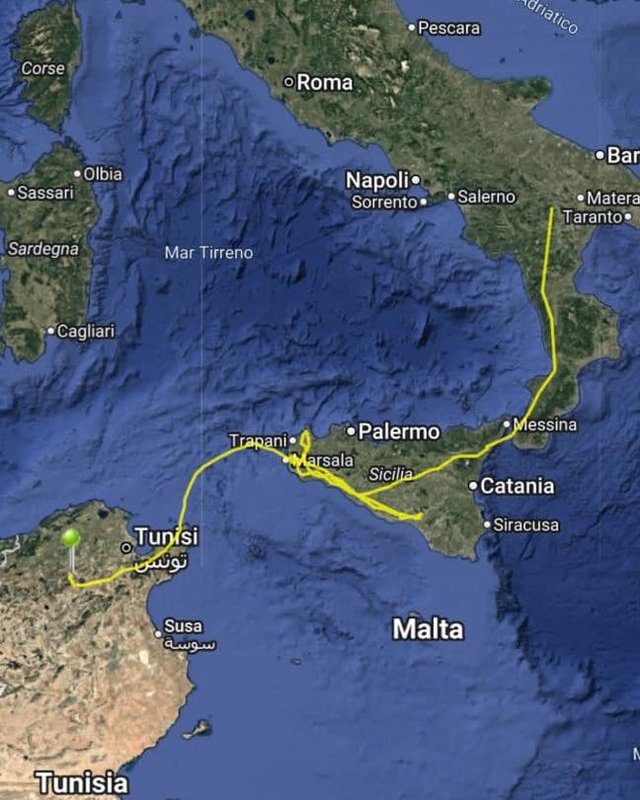
An extraordinary piece of news arrived last night: one of the black storks, ringed and equipped with a GPS tag by the Gallipoli Cognato Piccole Dolomiti Lucane Regional Park, successfully crossed the Strait of Sicily and reached Tunisia.
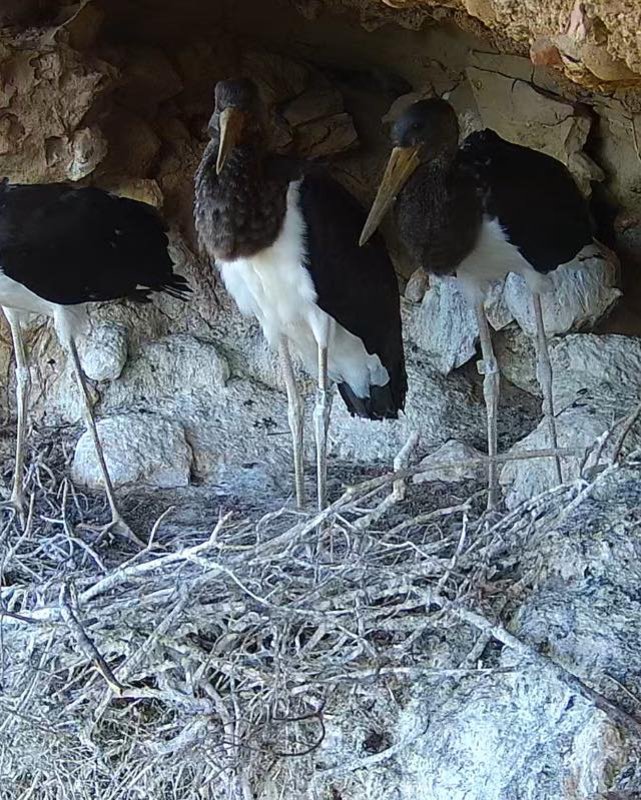
The bird, one of three born this year in a nest monitored by the Park, is being tracked as part of a multi-year project dedicated to the study of Ciconia nigra. The project includes monitoring nesting via webcams installed directly on the nest, the scientific ringing of the chicks, and the use of satellite devices to follow their movements.
Thanks to this technology, researchers have been able to document the behavior of the young storks in real time, collecting valuable data on the species' behavior.
The arrival in Tunisia represents a significant success for the project. Not only does it confirm the individual's health, but it also provides crucial information for better understanding migratory routes and the threats they face.
Now, the eyes of the researchers are on the rest of the journey: the young stork might continue even farther south, following the ancient migration paths toward sub-Saharan Africa.
Hello everyone
first info about storklet from the streamed nest
Parco Regionale Gallipoli Cognato Piccole Dolomiti Lucane
04.09.2025
An extraordinary piece of news arrived last night: one of the black storks, ringed and equipped with a GPS tag by the Gallipoli Cognato Piccole Dolomiti Lucane Regional Park, successfully crossed the Strait of Sicily and reached Tunisia.
The bird, one of three born this year in a nest monitored by the Park, is being tracked as part of a multi-year project dedicated to the study of Ciconia nigra. The project includes monitoring nesting via webcams installed directly on the nest, the scientific ringing of the chicks, and the use of satellite devices to follow their movements.
Thanks to this technology, researchers have been able to document the behavior of the young storks in real time, collecting valuable data on the species' behavior.
The arrival in Tunisia represents a significant success for the project. Not only does it confirm the individual's health, but it also provides crucial information for better understanding migratory routes and the threats they face.
Now, the eyes of the researchers are on the rest of the journey: the young stork might continue even farther south, following the ancient migration paths toward sub-Saharan Africa.
-
marika.solo
- Site Admin
- Posts: 29384
- Joined: 29 Sep 2021, 09:38
Re: ITALY - storks from the streamed nest
continuation
Re: ITALY - storks from the streamed nest
Hallo Marika , eine sehr schöne Nachricht . Ist es 1 Storch aus dem Nest in dem Felsen ? Die man unten sieht ?
-
marika.solo
- Site Admin
- Posts: 29384
- Joined: 29 Sep 2021, 09:38
-
marika.solo
- Site Admin
- Posts: 29384
- Joined: 29 Sep 2021, 09:38
Re: ITALY - storks from the streamed nest
September 12
Hello everyone
next info about storklet from the streamed nest
Parco Regionale Gallipoli Cognato Piccole Dolomiti Lucane
12.09.2025
https://www.facebook.com/gallipolicogna ... ajVPeMB6Fl
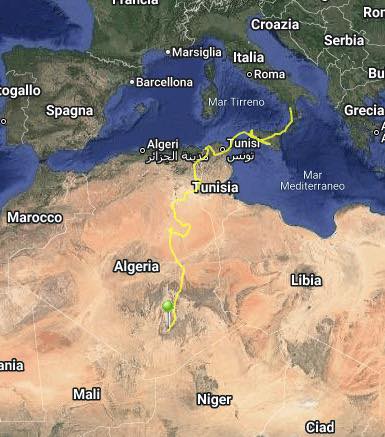
"Our stork continues to cross the desert… it just passed Mount Tanat in Algeria, flying at an altitude of 3,000 meters!!! Stay tuned!!"
Hello everyone
next info about storklet from the streamed nest
Parco Regionale Gallipoli Cognato Piccole Dolomiti Lucane
12.09.2025
https://www.facebook.com/gallipolicogna ... ajVPeMB6Fl
"Our stork continues to cross the desert… it just passed Mount Tanat in Algeria, flying at an altitude of 3,000 meters!!! Stay tuned!!"
-
marika.solo
- Site Admin
- Posts: 29384
- Joined: 29 Sep 2021, 09:38
-
marika.solo
- Site Admin
- Posts: 29384
- Joined: 29 Sep 2021, 09:38
Re: ITALY - storks from the streamed nest
September 18
Hello everyone
next info about storklet from the streamed nest
Parco Regionale Gallipoli Cognato Piccole Dolomiti Lucane
18.09.2025
https://www.facebook.com/gallipolicogna ... 3hpUWRHXwl
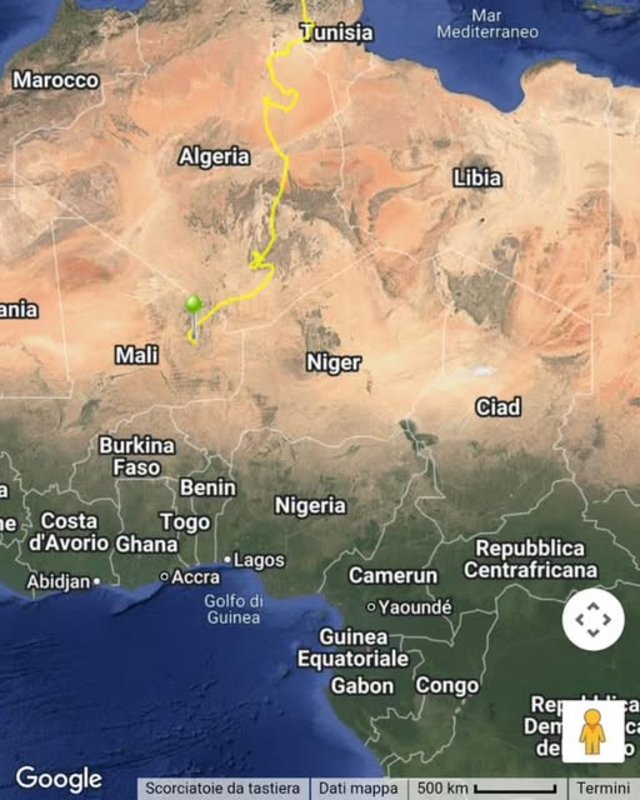
"After the effort of crossing Mount Tahat, our black stork Cipriana (we named her in honor of the patron saint of the town of Oliveto Lucano, where she was born!) took a two-day break. Now she’s on her way again and has reached Mali. It’s really not long until she arrives…"
Hello everyone
next info about storklet from the streamed nest
Parco Regionale Gallipoli Cognato Piccole Dolomiti Lucane
18.09.2025
https://www.facebook.com/gallipolicogna ... 3hpUWRHXwl
"After the effort of crossing Mount Tahat, our black stork Cipriana (we named her in honor of the patron saint of the town of Oliveto Lucano, where she was born!) took a two-day break. Now she’s on her way again and has reached Mali. It’s really not long until she arrives…"
-
marika.solo
- Site Admin
- Posts: 29384
- Joined: 29 Sep 2021, 09:38
Re: ITALY - storks from the streamed nest
September 30
"Our 3 storks are doing well. Cipriana is in Africa while the other two are in Italy. The park will post some updates soon!"
(info to me via messenger)
"Our 3 storks are doing well. Cipriana is in Africa while the other two are in Italy. The park will post some updates soon!"
(info to me via messenger)
-
marika.solo
- Site Admin
- Posts: 29384
- Joined: 29 Sep 2021, 09:38
POLAND
black storks successfully crossed the Mediterranean in the past too (know cases to me) : viewtopic.php?p=918#p918
-----
POLAND - AFRICA/Nigeria
FB BocianiMy https://www.facebook.com/BocianiMy/post ... nsrVapMyrl
28.10.2025
Kutno Foreset District 19X6
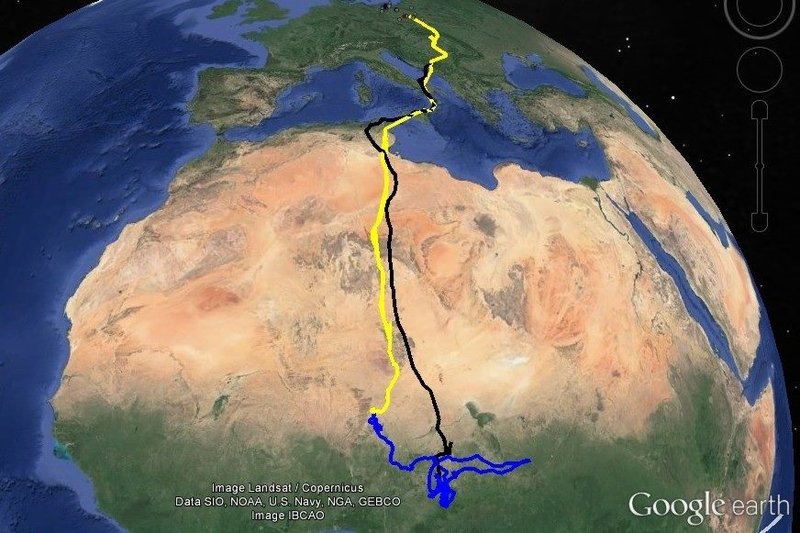
Such stories are rare because most birds don't survive such an adventure. A Polish #black_stork from the #Łódź_voivodeship flew over 6,500 km to Nigeria in a very unusual way, following the #southern_route. What’s extraordinary is that it crossed the Mediterranean Sea from Greece to Libya, flying continuously for over 500 km over open water for 17 hours, including at night, and then spent another 11 days crossing the sands of the #Sahara.
The stork is a large soaring bird, similar to most birds of prey. For such birds, significant barriers to overcome include mountains, deserts, and vast open bodies of water like seas and oceans. Water and seas are ecological barriers that force storks to actively fly, which is highly energy-consuming. That’s why more than 90% of them fly over land, where thermal updrafts are created. Over seas, they only fly through narrow straits near Gibraltar (western route) or Istanbul (eastern route).
As seen on the maps, the stork from the #Kutno_Forest_District flew low over the water at a slow speed and probably also used gliding flight. According to recent studies, in such situations, birds benefit from small upward air currents formed due to the temperature difference between the water surface and the air temperature (creating lift). The bird also likely had a favourable wind direction towards Africa. All of this together saved its life. Even though it was in great condition (with 50 days of stops), it could have simply not made it and drowned.
On the sands of the Sahara, it applied the strategy of using air thermals and gliding flight, as well as the principle that the higher you go, the cooler it gets. We now wish it peaceful and fish-filled winter holidays.
Takie historie rzadko się zdarzają, ponieważ większość ptaków nie przeżywa takiej eskapady. Polski #bocian_czarny z #województwa_łódzkiego przeleciał ponad 6500 km do Nigerii w bardzo nietypowy sposób, bo #szlakiem_południowym. Niezwykłe jest to, że pokonał Morze Śródziemne z Grecji do Libii lecąc nieustannie ponad 500 km nad otwartą wodą przez 17 godzin w tym także nocą, a potem jeszcze 11 dni przez piaski #Sahary. Bocian jest dużym ptakiem szybującym, podobnie jak większość szponiastych. Dla takich ptaków poważnymi barierami do pokonania są góry, pustynie i właśnie duże przestrzenie otwarte wód typu morza i oceany. Woda i morze to bariera ekologiczna zmuszająca bociany do aktywnego lotu, który jest bardzo energochłonny. Dlatego ponad 90% z nich leci nad lądem, gdzie powstają wznoszące prądy termiczne. Wtedy nad morzami przelatują jedynie przez wąskie cieśniny w pobliżu Gibraltaru (szlak zachodni) lub Stambułu (szlak wschodni). Jak widać na mapkach bocian pochodzący z #Nadleśnictwa_Kutno leciał nisko nad wodą z niewielką prędkością i prawdopodobnie mógł także używać lotu ślizgowego. Według najnowszych badań ptakom w takiej sytuacji pomagają niewielkie prądy wypiętrzające powstałe na skutek różnicy temperatury pomiędzy temperaturą powierzchni wody, a temperaturą powietrza (powstaje wtedy siła nośna). Prawdopodobnie też ptak miał korzystny wiatr w kierunku Afryki. To wszystko razem uratowało jego życie. Mimo że był w świetnej kondycji (50 dni postojów), mógł po prostu nie dać rady i utonąć. Na piaskach Sahary natomiast zastosował strategię korzystania z powietrznych kominów i lotu szybowcowego oraz zasadę, że im wyżej, tym chłodniej. Życzymy mu teraz spokojnych i zasobnych w ryby zimowych wakacji
-----
POLAND - AFRICA/Nigeria
FB BocianiMy https://www.facebook.com/BocianiMy/post ... nsrVapMyrl
28.10.2025
Kutno Foreset District 19X6
Such stories are rare because most birds don't survive such an adventure. A Polish
 #black_stork from the #Łódź_voivodeship flew over 6,500 km to Nigeria in a very unusual way, following the #southern_route. What’s extraordinary is that it crossed the Mediterranean Sea from Greece to Libya, flying continuously for over 500 km over open water for 17 hours, including at night, and then spent another 11 days crossing the sands of the #Sahara.
The stork is a large soaring bird, similar to most birds of prey. For such birds, significant barriers to overcome include mountains, deserts, and vast open bodies of water like seas and oceans. Water and seas are ecological barriers that force storks to actively fly, which is highly energy-consuming. That’s why more than 90% of them fly over land, where thermal updrafts are created. Over seas, they only fly through narrow straits near Gibraltar (western route) or Istanbul (eastern route).
As seen on the maps, the stork from the #Kutno_Forest_District flew low over the water at a slow speed and probably also used gliding flight. According to recent studies, in such situations, birds benefit from small upward air currents formed due to the temperature difference between the water surface and the air temperature (creating lift). The bird also likely had a favourable wind direction towards Africa. All of this together saved its life. Even though it was in great condition (with 50 days of stops), it could have simply not made it and drowned.
On the sands of the Sahara, it applied the strategy of using air thermals and gliding flight, as well as the principle that the higher you go, the cooler it gets. We now wish it peaceful and fish-filled winter holidays.
Takie historie rzadko się zdarzają, ponieważ większość ptaków nie przeżywa takiej eskapady. Polski
#bocian_czarny z #województwa_łódzkiego przeleciał ponad 6500 km do Nigerii w bardzo nietypowy sposób, bo #szlakiem_południowym. Niezwykłe jest to, że pokonał Morze Śródziemne z Grecji do Libii lecąc nieustannie ponad 500 km nad otwartą wodą przez 17 godzin w tym także nocą, a potem jeszcze 11 dni przez piaski #Sahary. Bocian jest dużym ptakiem szybującym, podobnie jak większość szponiastych. Dla takich ptaków poważnymi barierami do pokonania są góry, pustynie i właśnie duże przestrzenie otwarte wód typu morza i oceany. Woda i morze to bariera ekologiczna zmuszająca bociany do aktywnego lotu, który jest bardzo energochłonny. Dlatego ponad 90% z nich leci nad lądem, gdzie powstają wznoszące prądy termiczne. Wtedy nad morzami przelatują jedynie przez wąskie cieśniny w pobliżu Gibraltaru (szlak zachodni) lub Stambułu (szlak wschodni). Jak widać na mapkach bocian pochodzący z #Nadleśnictwa_Kutno leciał nisko nad wodą z niewielką prędkością i prawdopodobnie mógł także używać lotu ślizgowego. Według najnowszych badań ptakom w takiej sytuacji pomagają niewielkie prądy wypiętrzające powstałe na skutek różnicy temperatury pomiędzy temperaturą powierzchni wody, a temperaturą powietrza (powstaje wtedy siła nośna). Prawdopodobnie też ptak miał korzystny wiatr w kierunku Afryki. To wszystko razem uratowało jego życie. Mimo że był w świetnej kondycji (50 dni postojów), mógł po prostu nie dać rady i utonąć. Na piaskach Sahary natomiast zastosował strategię korzystania z powietrznych kominów i lotu szybowcowego oraz zasadę, że im wyżej, tym chłodniej. Życzymy mu teraz spokojnych i zasobnych w ryby zimowych wakacji