in PREPARATION
General info + main events
Live broadcast from the black stork nest
https://www.ornitostogos.lt/tiesiogine- ... ndru-lizdo
streaming started on 16.04 at 9h
Broadcast partner: „Transtira“
IMPORTANT: Copying and using video clips from the broadcasts for personal purposes without the consent of „Ornitostogos“ is PROHIBITED.
SEASON 2026
ARRIVALs
male arrived on Stork Day (Gandinės) = 25.03
female arrived immediately after Easter = 07.04 (?)
EGGS- laying
first egg - presumably: 13./14.04
second egg - night 15./16.04
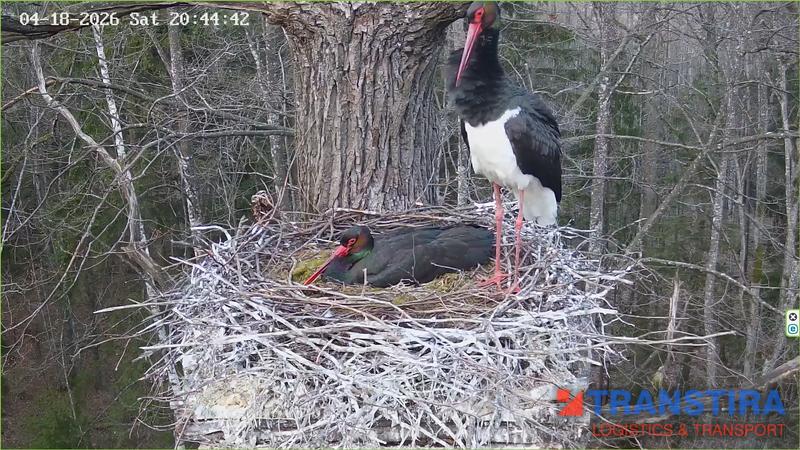
third egg - night 17./18.04
I received information about right egg laying dates:
1st egg night 12./13. - 2nd egg 13./15 - 3rd egg 16./17. - 4th egg 18./19.
CHICKS - hatching
We can expect the first storklet to hatch around May 18 (April 13 + 35 days of incubation = May 18).
- FIRST chick - on 17.05.2026 (34 days after laying)
- SECOND chick - on 17.05.2026 (32 days after laying)
- THIRD chick - on 18.05.2026 (31 days after laying)
- FOURTH chick - on 19.05.2026 (30 days after laying)
FLEDGING
- XY on at
LEAVING THE NEST
chicks
- XY on at
adults
- female: on at
- male: on at
OTHER MAJOR EVENTS
Kaunas Forest
-
marika.solo
- Site Admin
- Posts: 29328
- Joined: 29 Sep 2021, 09:38
Re: Kaišiadorys District (Kaunas County)
Short history of previous seasons
The Black Stork (Ciconia nigra) is an inhabitant of large, mature forests and is listed in the Lithuanian Red Data Book. This particular pair nests in one of the forests near Kaunas. In the nest, which scientists discovered ten years ago, they used to raise up to four chicks every year.
However, over time, the discovered nest began to decay. Consequently, in 2023, the Lithuanian Ornithological Society and ornithologist Darius Musteikis, along with his team, installed an artificial nest to replace the old one. The storks approved of the home "renovation," and since then, they have gladly returned to it every spring.
The Black Stork (Ciconia nigra) is an inhabitant of large, mature forests and is listed in the Lithuanian Red Data Book. This particular pair nests in one of the forests near Kaunas. In the nest, which scientists discovered ten years ago, they used to raise up to four chicks every year.
However, over time, the discovered nest began to decay. Consequently, in 2023, the Lithuanian Ornithological Society and ornithologist Darius Musteikis, along with his team, installed an artificial nest to replace the old one. The storks approved of the home "renovation," and since then, they have gladly returned to it every spring.
-
marika.solo
- Site Admin
- Posts: 29328
- Joined: 29 Sep 2021, 09:38
Re: Kaišiadorys District (Kaunas County)
Location & residents
Location
This nesting site was discovered ten years ago in a forest in the outskirts of Kaunas by ornithologists from the Kaunas Tadas Ivanauskas Zoological Museum while they were conducting monitoring work on white-tailed eagles. According to scientists, the storks have nested here throughout all those years, often raising as many as four chicks. Only last year was the brood slightly smaller, with two chicks.
However, over the long term, the nest began to decay. Consequently, in 2023, the Lithuanian Ornithological Society and ornithologist Darius Musteikis, along with his team, took action to repair it, installing an artificial platform in its place. The storks took a liking to the "renovation" of their home and have been returning to it happily every spring since then.
Location
This nesting site was discovered ten years ago in a forest in the outskirts of Kaunas by ornithologists from the Kaunas Tadas Ivanauskas Zoological Museum while they were conducting monitoring work on white-tailed eagles. According to scientists, the storks have nested here throughout all those years, often raising as many as four chicks. Only last year was the brood slightly smaller, with two chicks.
However, over the long term, the nest began to decay. Consequently, in 2023, the Lithuanian Ornithological Society and ornithologist Darius Musteikis, along with his team, took action to repair it, installing an artificial platform in its place. The storks took a liking to the "renovation" of their home and have been returning to it happily every spring since then.
-
marika.solo
- Site Admin
- Posts: 29328
- Joined: 29 Sep 2021, 09:38
Re: Kaišiadorys District (Kaunas County)
next day 17.04 viewtopic.php?p=55872#p55872
April 16
Hello everyone
EGGS
 night 13./14.04 - XY days after female arrival
night 15./16.04
female is ringed
16.04.2026 https://www.facebook.com/reel/786968144263768
pic from the reel
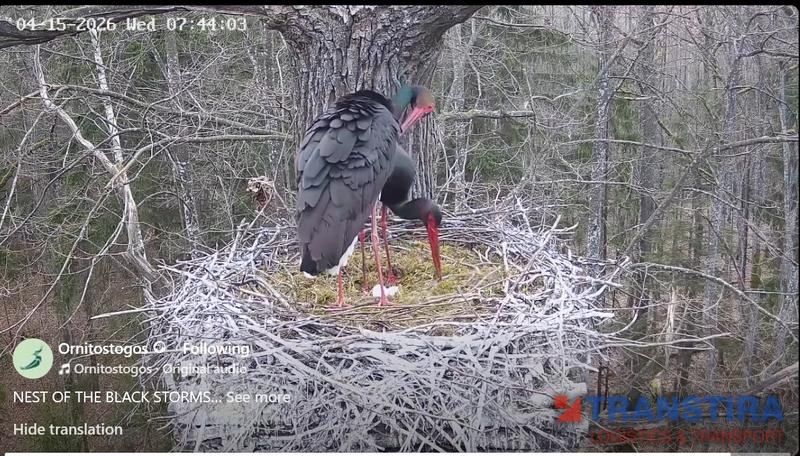
Our fourth broadcast comes from a black stork nest—home to one of the most mysterious birds in the Lithuanian forests. You may remember that last year we observed a pair whose nesting season was unsuccessful; all three (marika.solo: 2) of the growing chicks were taken from the nest, one by one, by white-tailed eagles. This year, we have chosen a different stork pair follow.
This nesting site was discovered ten years ago in a forest near Kaunas by ornithologists from the Kaunas Tadas Ivanauskas Zoological Museum while they were conducting monitoring work on white-tailed eagles. According to scientists, the storks have nested here throughout all those years, often raising as many as four chicks. Only last year was the brood slightly smaller, with two chicks. (marika.solo: 4 eggs, 4 chicks hatched, shortly after hatch maybe the male swallowed them/cronism).
marika.solo: The phenomenon of birds eating their own young or eggs is known as filial cannibalism or cronism (derived from the Greek myth of Cronus, who ate his children). While it seems counterintuitive to animal care, this behaviour is a known, albeit rare, survival strategy across several species.
However, over the long term, the nest began to decay. Consequently, in 2023, the Lithuanian Ornithological Society and ornithologist Darius Musteikis, along with his team, took action to repair it, installing an artificial platform in its place. The storks took a liking to the "renovation" of their home and have been returning to it happily every spring since then.
This year, the first stork of the new pair appeared at the nest on Stork Day (Gandinės), the second returned immediately after Easter, and the parents are already diligently tending to two eggs. It appears the female laid the second egg last night or in the early hours of the morning.
-----
Stork Day (Gandinės) = 25.03
immediately after Easter = 07.04 (?)
first egg - presumably: 13./14.04
second egg - night 15./16.04
? 26.03.2026
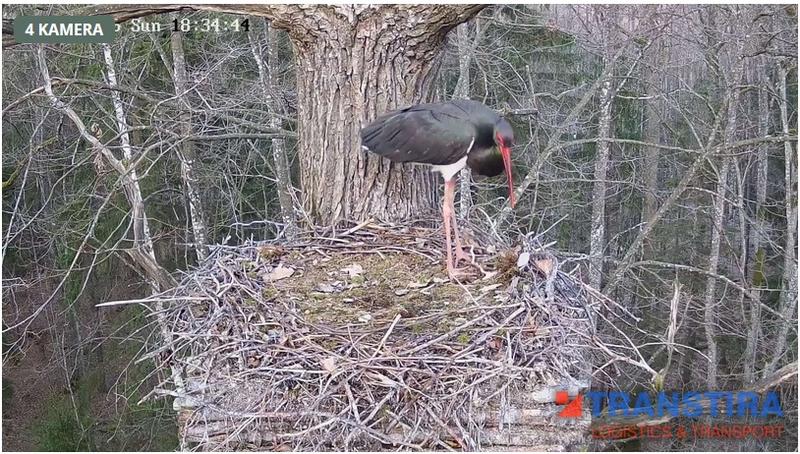
https://www.ornitostogos.lt/
April 16
Hello everyone
EGGS
 night 13./14.04 - XY days after female arrivalnight 15./16.04
female is ringed
16.04.2026 https://www.facebook.com/reel/786968144263768
pic from the reel
Our fourth broadcast comes from a black stork nest—home to one of the most mysterious birds in the Lithuanian forests. You may remember that last year we observed a pair whose nesting season was unsuccessful; all three (marika.solo: 2) of the growing chicks were taken from the nest, one by one, by white-tailed eagles. This year, we have chosen a different stork pair follow.
This nesting site was discovered ten years ago in a forest near Kaunas by ornithologists from the Kaunas Tadas Ivanauskas Zoological Museum while they were conducting monitoring work on white-tailed eagles. According to scientists, the storks have nested here throughout all those years, often raising as many as four chicks. Only last year was the brood slightly smaller, with two chicks. (marika.solo: 4 eggs, 4 chicks hatched, shortly after hatch maybe the male swallowed them/cronism).
marika.solo: The phenomenon of birds eating their own young or eggs is known as filial cannibalism or cronism (derived from the Greek myth of Cronus, who ate his children). While it seems counterintuitive to animal care, this behaviour is a known, albeit rare, survival strategy across several species.
However, over the long term, the nest began to decay. Consequently, in 2023, the Lithuanian Ornithological Society and ornithologist Darius Musteikis, along with his team, took action to repair it, installing an artificial platform in its place. The storks took a liking to the "renovation" of their home and have been returning to it happily every spring since then.
This year, the first stork of the new pair appeared at the nest on Stork Day (Gandinės), the second returned immediately after Easter, and the parents are already diligently tending to two eggs. It appears the female laid the second egg last night or in the early hours of the morning.
-----
Stork Day (Gandinės) = 25.03
immediately after Easter = 07.04 (?)
first egg - presumably: 13./14.04
second egg - night 15./16.04
? 26.03.2026
https://www.ornitostogos.lt/
-
marika.solo
- Site Admin
- Posts: 29328
- Joined: 29 Sep 2021, 09:38
Re: Kaišiadorys District (Kaunas County)
I scrolled back (it is not easy) and the 2nd egg is already here on 15.04
(Perhaps earlier )
)
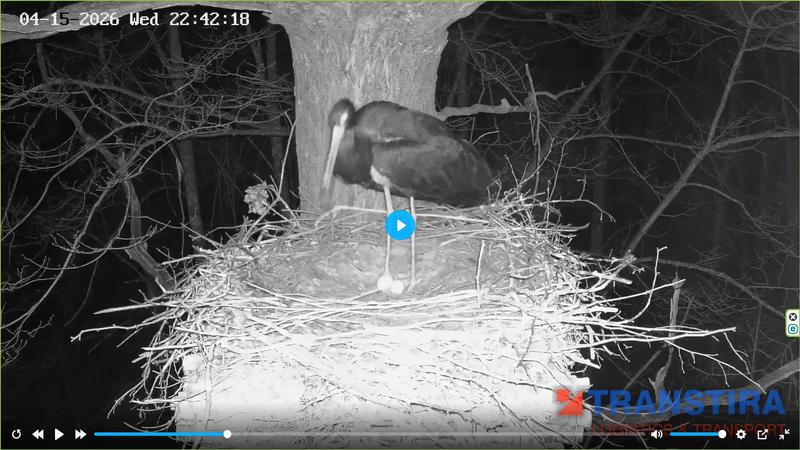
female out (ring)
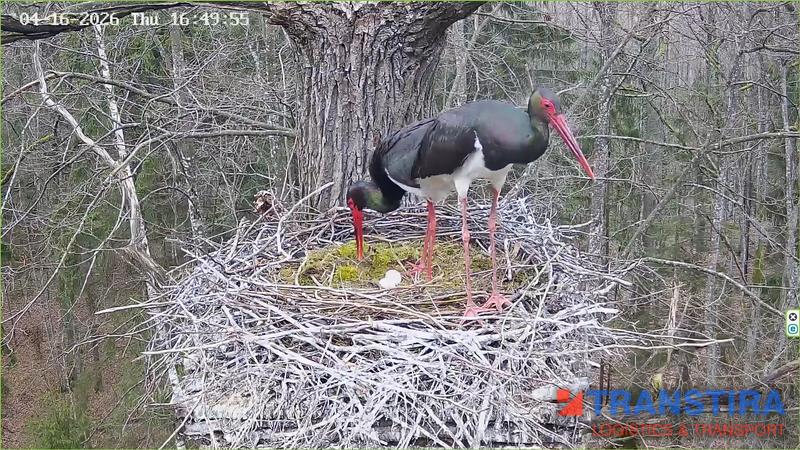
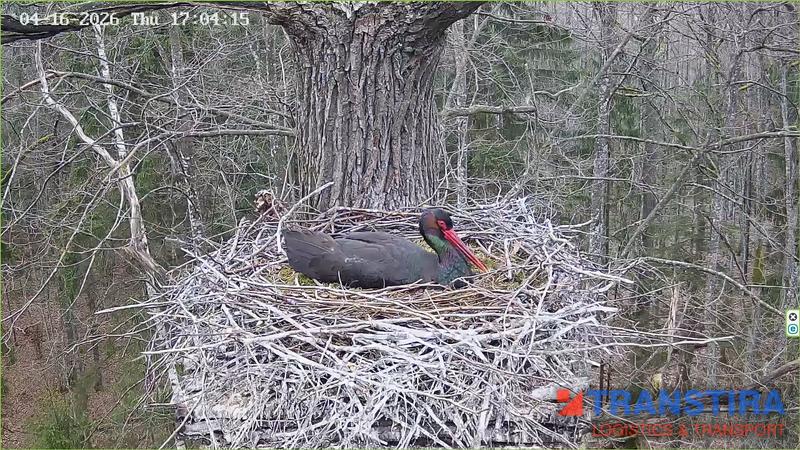
(Perhaps earlier
)female out (ring)
-
marika.solo
- Site Admin
- Posts: 29328
- Joined: 29 Sep 2021, 09:38
Re: Kaišiadorys District (Kaunas County)
previous day 16.04 viewtopic.php?p=55823#p55823
next day 18.04 viewtopic.php?p=55921#p55921
April 17
Hello everyone
EGGS
night 13./14.04 - XY days after female arrival
night 15./16.04
female is ringed
female
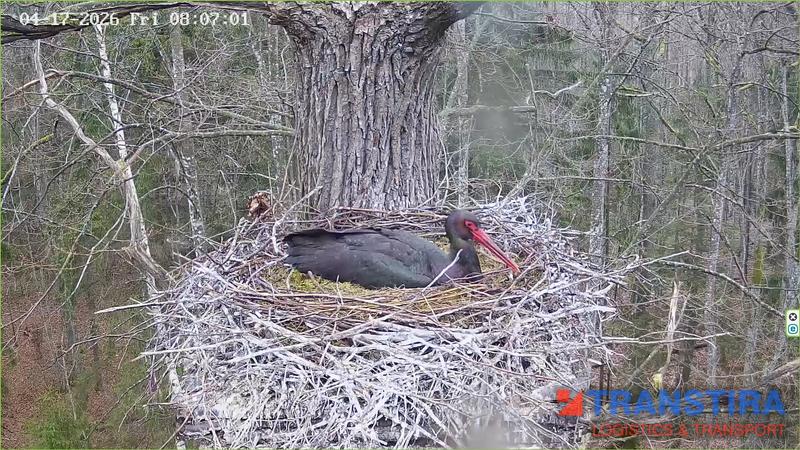
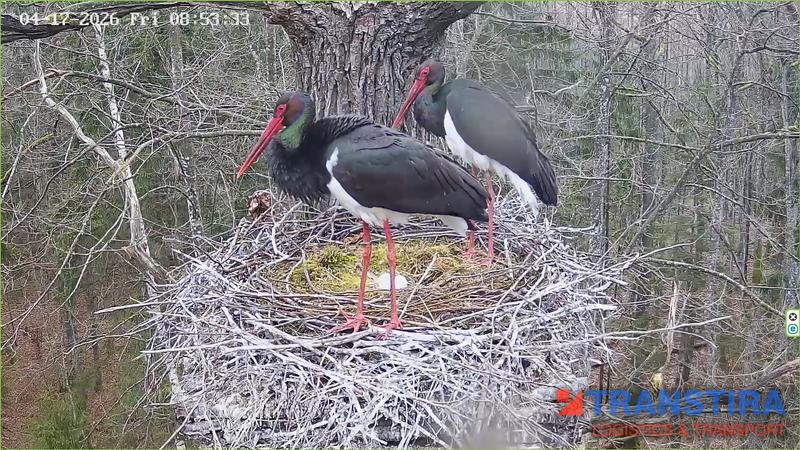
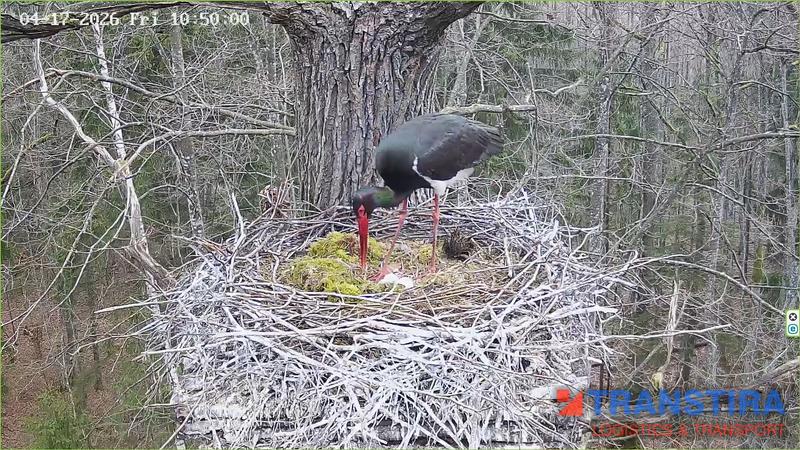
greeting - mating - female out
next day 18.04 viewtopic.php?p=55921#p55921
April 17
Hello everyone
EGGS
night 13./14.04 - XY days after female arrivalnight 15./16.04female is ringed
female
greeting - mating - female out
-
marika.solo
- Site Admin
- Posts: 29328
- Joined: 29 Sep 2021, 09:38
Re: Kaišiadorys District (Kaunas County)
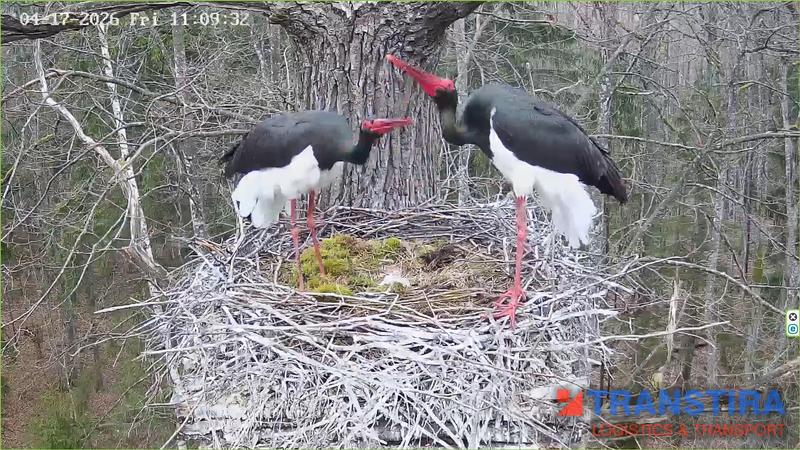
someone very unwanted is flying near/around the nest - very intensive defending behaviour (male arrived to the nest)
-
marika.solo
- Site Admin
- Posts: 29328
- Joined: 29 Sep 2021, 09:38
Re: Kaišiadorys District (Kaunas County)
previous day 17.04 viewtopic.php?p=55872#p55872
next day 19.04 viewtopic.php?p=55967#p55967
April 18
Hello everyone
EGGS
night 13./14.04 - XY days after female arrival
night 15./16.04
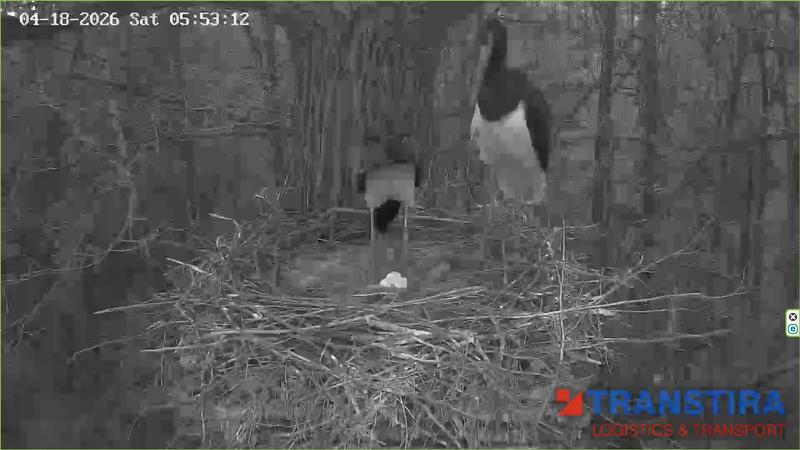
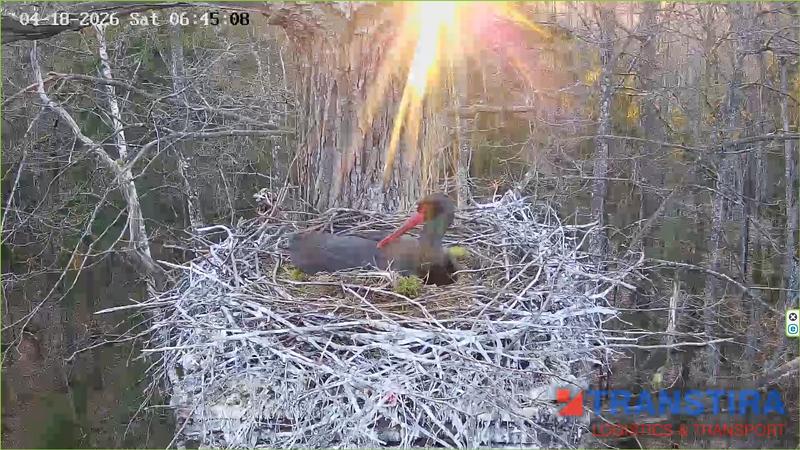
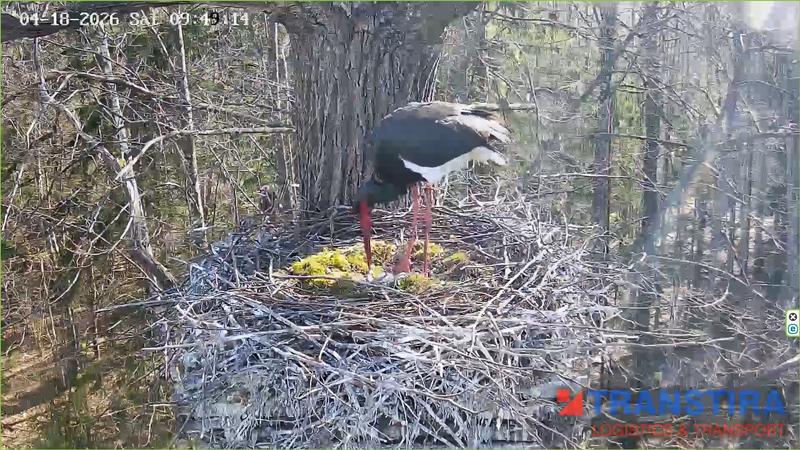
night 17./18.04
female is ringed
next day 19.04 viewtopic.php?p=55967#p55967
April 18
Hello everyone
EGGS
night 13./14.04 - XY days after female arrivalnight 15./16.04night 17./18.04female is ringed
-
marika.solo
- Site Admin
- Posts: 29328
- Joined: 29 Sep 2021, 09:38
-
marika.solo
- Site Admin
- Posts: 29328
- Joined: 29 Sep 2021, 09:38
Re: Kaunas Forest
previous day 18.04 viewtopic.php?p=55921#p55921
next day 20.04 viewtopic.php?p=56058#p56058
April 19
Hello everyone
EGGS
I received information about right egg laying dates:
1st egg night 12./13. - 2nd egg 13./15 - 3rd egg 16./17. - 4th egg 18./19.
next day 20.04 viewtopic.php?p=56058#p56058
April 19
Hello everyone
EGGS
I received information about right egg laying dates:
1st egg night 12./13. - 2nd egg 13./15 - 3rd egg 16./17. - 4th egg 18./19.